Learn how to make the traditional Greek skordalia recipe, a creamy garlic and potato dip made with olive oil, vinegar, and garlic. Perfect with vegetables, fish, or warm pita.
Some of my favorite traditional recipes are the humble ones that were born out of necessity rather than luxury. Skordalia is one of those dishes. Made from simple pantry staples like potatoes, garlic, olive oil, and vinegar, it was traditionally prepared in a mortar and pestle, with each ingredient slowly worked together into a creamy, garlicky paste.
If your family enjoys hummus or aioli as much as mine does, skordalia is another Mediterranean dip worth trying.

What Is Skordalia?
Skordalia is a traditional Greek garlic and potato dip made by blending mashed potatoes, garlic, olive oil, and vinegar into a smooth, creamy spread. While potatoes are the most common base, some regional versions use stale bread, walnuts, or almonds instead.
This garlicky dip is a staple of Greek food and is traditionally served with fried cod on March 25th, Greece’s Independence Day. Today, people enjoy it year-round as a dip, spread, or side dish alongside vegetables, fish, and warm pita bread.
Why You’ll Love This Greek Garlic Dip
- Made with simple pantry ingredients
- Naturally vegetarian and gluten-free
- Perfect as a dip, spread, or side dish
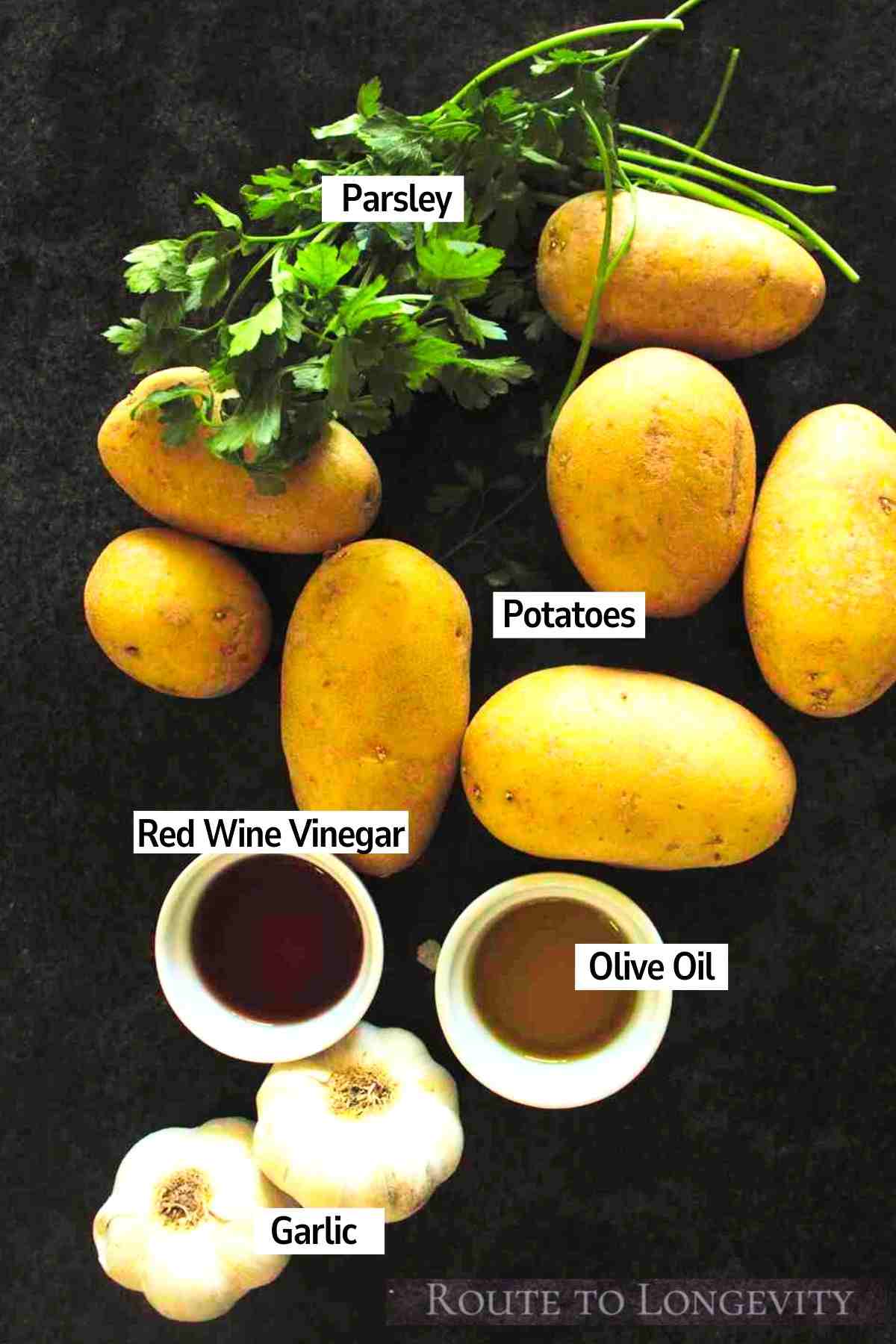
Ingredients You’ll Need
Best Potatoes for Greek Garlic and Potato Dip
Potatoes are what give skordalia its wonderfully creamy texture. I usually reach for Russet potatoes because they mash up light and fluffy, but Yukon Gold potatoes work beautifully too if you prefer a richer, creamier dip. Honestly, either one will work well, so use whatever you have on hand.
Garlic Cloves
Garlic is the heart and soul of skordalia. Traditional Greek recipes aren’t shy about using a lot of garlic, which is what gives this dip its bold, unmistakably garlicky flavor. If you’re a garlic lover, you’ll appreciate the authentic version made with fresh cloves of garlic.
If you prefer something a little gentler, try using roasted garlic instead.
Extra Virgin Olive Oil
This is one ingredient I wouldn’t skimp on. Since skordalia contains only a handful of ingredients, the flavor of the olive oil really shines through.
Red Wine Vinegar
A splash of red wine vinegar adds just enough tang to brighten the whole dish. If you don’t have red wine vinegar, don’t worry. Fresh lemon juice works wonderfully and gives the dip a slightly fresher flavor. White wine vinegar or apple cider vinegar are also good substitutes.
Salt
Don’t underestimate the salt. It helps bring all the flavors together and can make the difference between a good skordalia and a great one. I recommend starting with a little and adjusting to taste once everything is blended.
Fresh Parsley
A sprinkle of fresh parsley adds a touch of color and freshness right before serving. It’s completely optional, but I love how it brightens the finished dish. Fresh dill or chives are lovely alternatives if that’s what you have growing in the garden
Other Greek recipes to inspire you
How to make Skordalia
First Step: Cook the Potatoes
Place the cubed potatoes into a large pot of salted water. Bring to a boil and cook until the potatoes are tender and easily pierced with a fork, about 15–20 minutes. Before draining, reserve 1/4 cup of the cooking water.

Second Step: Make the Garlic Paste
While the potatoes cook, peel the garlic cloves and remove any green sprouts from the center. Place the garlic and 1 teaspoon salt into a mortar and pestle and crush until a smooth garlic paste forms. If you don’t have a mortar and pestle, a garlic press or microplane works well too.
Third Step: Mash the Potatoes and combine
Drain the potatoes and mash with a potato masher, food processor, or stand mixer until smooth. Gradually add garlic paste and red wine vinegar. Lastly, add the olive oil until smooth. If the potatoes seem dry, you can also add a little of the reserved cooking water; however, I didn’t need it.
Fourth Step: Serve
Transfer to a serving bowl and drizzle with olive oil. Garnish with fresh parsley and serve at room temperature with warm pita bread, vegetables, or fish.
Skordalia Recipe Variations
Throughout Greece, you’ll find several versions of skordalia.
Walnut Skordalia
If you enjoy a slightly nutty flavor, try adding walnuts to your skordalia. They make the dip a little richer and give it a deeper, earthier taste that works beautifully with the garlic and olive oil. I especially like this version served with roasted vegetables or alongside grilled fish.

Almond Skordalia recipe
Almonds create a softer, creamier version of skordalia. They help mellow the garlic and add a subtle sweetness that makes the dip feel extra smooth and luxurious. If you’re serving skordalia to people who aren’t big garlic fans, this variation is a great place to start.
Bread Skordalia recipe
Long before potatoes became the most popular base, many Greek families made skordalia with stale bread. It’s a wonderful example of how traditional cooks wasted nothing and made the most of what they had in the pantry. The bread is soaked, squeezed dry, and blended with garlic, olive oil, and vinegar into a light, fluffy dip. If you have leftover bread sitting on the counter, this is a delicious way to give it a second life.
What Does Skordalia Taste Like?
Skordalia is creamy, tangy, and intensely garlicky. The potatoes mellow the sharpness of the garlic while olive oil adds richness and a silky texture. A splash of vinegar or lemon juice brightens the entire dish and balances the flavors.

What to serve with Skordalia?
Skordalia is traditionally served with fried cod, but there are many other delicious ways to enjoy this Greek garlic and potato dip.
I love serving this delicious greek garlic dip with warm pita bread, roasted vegetables, grilled fish, or these Italian Chicken Cutlets. It also pairs beautifully with beet salad, fried zucchini, and roasted eggplant. If you’re putting together a mezze platter, this Greek garlic dip fits right in alongside hummus, olives, and fresh vegetables.
Because it is made from potatoes, olive oil, and plenty of garlic, skordalia is incredibly versatile. Use it as a dip for vegetables, spread it on sandwiches, or serve it with falafel and Mediterranean grain bowls for a simple meal. If you enjoy Greek dips, this easy skordalia recipe is one you’ll come back to again and again.
Are these traditional Greek garlic mashed potatoes healthy?
Skordalia contains several ingredients commonly found in the Mediterranean diet. Potatoes provide potassium and fiber, garlic contains beneficial plant compounds, and extra virgin olive oil contributes heart-healthy monounsaturated fats.
For an even more nutrient-dense version, try adding walnuts or almonds, which provide healthy fats, minerals, and antioxidants.
Can I make Greek skordalia ahead of time?
Yes. Skordalia can be prepared up to two days in advance and stored in the refrigerator.
Why is my skordalia gummy?
Overmixing potatoes can release excess starch and create a gluey texture. Mash the potatoes gently and blend only until combined.
Is skordalia dip served warm or cold?
It is most often served at room temperature, though many people enjoy it slightly chilled.
Can I Use Sweet Potatoes?
Yes! While traditional skordalia is made from potatoes such as Russet or Yukon Gold, sweet potatoes can be a delicious alternative. They create a slightly sweeter, creamier dip that pairs surprisingly well with the garlic and olive oil.
Keep in mind that the flavor will be quite different from classic Greek skordalia. If you’re using sweet potatoes, I recommend adding a little extra vinegar or fresh lemon juice to balance their natural sweetness.


Creamy Skordalia Recipe (Greek Garlic and Potato Dip)
Equipment
- potato masher
Ingredients
- 2 lbs peeled and cubed 900 g potatoes
- 3-6 garlic cloves peeled
- ¾ teaspoon salt divided
- ⅓ cup olive oil extra virgin
- 2 tablespoons red wine vinegar
- Up to ¼ cup reserved potato cooking water
for serving
- Fresh parsley and olive oil for serving
Instructions
- Place the cubed potatoes into a large pot of salted water. Bring to a boil and cook until the potatoes are tender and easily pierced with a fork, about 15–20 minutes. Before draining, reserve 1/4 cup of the cooking water.
- While the potatoes cook, peel the garlic cloves and remove any green sprouts from the center. Place the garlic and 1 teaspoon salt into a mortar and pestle and crush until a smooth garlic paste forms. If you don’t have a mortar and pestle, a garlic press or microplane works well too.
- Drain the potatoes and mash with a potato masher, food processor, or stand mixer until smooth. Gradually add garlic paste and red wine vinegar. Lastly, add the olive oil to reach a smooth texture. If the potatoes seem dry, you can also add a little of the reserved cooking water; however, I didn’t need it.
- Transfer to a serving bowl and drizzle with olive oil. Garnish with fresh parsley and serve at room temperature with warm pita bread, vegetables, or fish.
Notes
- Traditional skordalia uses a lot of garlic, so don’t be surprised if the flavor seems bold at first.
- For a milder version, replace some of the fresh garlic with roasted garlic.
- Fresh lemon juice can be substituted for some or all of the vinegar.
- Store leftovers in the refrigerator for up to 3 days.


